- F-amily: Do you have kids? Where is your family from? How long have you lived around here?
- O-ccupation: What do you do for a living? What is that like? Have you always been a circus acrobat?
- R-ecreation: What do you guys do for fun? How long have you been involved in SCA? Where do you buy chain-mail or did you make it yourself?
- M-oney: What happened with the price of gas? Did you see that last school bond issue? How do you think the new liquor store laws will shake out? Anybody you know lose their job lately?
Saturday, September 10, 2016
FORM - small talk
mnemonic I use is: FORM

Monday, August 29, 2016
How to deal with rejection
- Recall your previous rejections. People have a tendency to overestimate the importance of things. You endure your first break-up and think, "This is the worst thing in the world. I will never be able to get over this and never be able to date again." Of course, that's not really true, but it feels true at the time. A few months later, you look back in amusement at how much you blew things out of proportion. Rejection is often like that: you don't get the job or the raise or the first date, and you start thinking about how awful things are. But even if they're awful now, they'll seem insignificant in a few years or even a few weeks. Stepping back and remembering the tendency to blow things out of proportion can keep the feelings of rejection under control.
- Reconsider your expectations. The pain of rejection is proportional to your expectations. It's hard to feel rejected losing the lottery because you don't expect to win, but it's easy to feel rejected in other cases where you treat success as if it were certain even though it is not. Think carefully about whether your expectations were realistic. If they were not, then having a better understanding of what you were up against can soften the blow.
- Don't drink the poison. There's a great quote about the ineffectiveness of resentment: "Resentment is like drinking poison and then waiting for the other person to die." Feeling dejected and depressed are like that too. You can feel sad or angry about how things worked out, but that will just make you sad or angry and won't change anything. In fact, you'll just be more anxious the next time around. Instead of feeling sorry for yourself, use your experience as a learning opportunity and figure out what you can do differently next time.
- It's a numbers game. If you ever read about great salespeople, they love rejection. If a salesman knows that he can close a sale half of the time, then having 30 rejections this month implies he also had about 30 sales. The more rejections you go through, the more sales you'll make. Think of rejection as an indicator of your perseverance. If you have a 25% success rate at something, then remember that some amount of rejection and failure is to be expected.
- Separate the decision from the outcome. Some choices are inherently risky. For example, let's say I propose the following game: you pay me a dollar, I flip a coin, if it's heads I give you $10 and if it's tails you get nothing. This is a great bet for you to take, but of course you will walk away with nothing half of the time. The key is to remember is that you made the right decision, even though it did not lead to the ideal outcome. Making good choices is all you can ask of yourself. For example, let's say that if you ask for a raise, perhaps nothing happens 2/3 of the time and you get a 10% salary bump 1/3 of the time. So you ask your boss, and he says no. That sucks. But did you make the right decision? Sure! You had nothing to lose, and you knew that asking was not a sure bet. Your correct decision didn't pay off this time, but it might pay off the next time or the time after that. Why would you be unhappy about making the right choice?
- Concentrate on the things that are in your control. If you're interviewing for a job, you can control how much studying you do before the interview, how carefully you think about the interview questions, and whether or not you show up on time. You cannot control whether your interviewer is having a bad day or whether the other interviewees are a better fit for the position than you are. If you focus on the parts you control, you cannot fail. If you were on time, well-rested, and did your best, then be happy that you did everything that you could. There's literally nothing you can do about how your interviewer is feeling or who the other candidates are, so why worry about those things? Focusing on something that's outside of your control is pointless (by definition), so just don't dwell on it.
- Focus on the process, not on the goal. If your goal is to get a job, then you'll be anxious during the interview and disappointed if you don't get the job. If your goal is to do your best at an interview or to apply the lessons you learned at the last interview, then success is entirely in your control. This is a refinement of the last point: if the process is in your control but the outcome is not, then focus only on the process.
- Start planning your next attempt. The worst thing you can do after a rejection is to sit around and mope. Moping won't fix anything and you may get stuck in a downward spiral. Instead, extract lessons from your attempt and start planning for a stronger attempt in the near future. Staying busy is the best remedy for many things in life.
Saturday, August 27, 2016
Most Common life mistake young people makes
Drifting Along. Being carried along on no particular course is a strong prerequisite for ending up living a miserable life. You have to acknowledge that the life has already begun and it is high time to define your goals and aspire to them. Having an aspiration is crucial. Make decisions, take responsibility and be the one and only who determines the trajectory of your life.
Saying “I can`t” To Everything That Looks Complex. It is not worth anything to say “I don`t know” or “I can’t”. It instantly lets you relax and not put too much effort in dealing with an issue. However, this is not what will take you far from the place you are now. Adopt a habit to accept any challenge no matter how difficult it seems to be. Take some time to figure everything out and get everything right. Persist and you will succeed.
Postponing Life. It is a widespread belief that there will be a second chance to do anything: to ask someone out, to travel, to express your feelings, to start a business, to write a novel… Usually, that chance never comes. Later often means never. If you have a desire and possibility to do something, do it immediately! Do not postpone anything. Live now!
Wasting Time On Social Media. It is a huge source of entertainment. Meanwhile, it is a huge consumer of your most precious asset, namely time. While social media is responsible for the biggest fraction of time spent on the web by young people, it barely adds any value to personal growth and development. Go offline and use your time wisely.
Stopping Studying. Your college or university was just a warm-up, a light interlude that was meant to teach you how to learn. Your actual studying just starts and it didn`t finish after prom party. Acquiring new skills and knowledge is crucial throughout your whole life if you are not willing to be left behind. Remain in constant learning mode and always strive to improve yourself.
Trying To Please Everyone. The desire to be a favorite one is inherent in all human beings. However, the truth is there are always people who do not like you and what you do. There are always those who are constantly ready to criticize and hate. Do not let them break you. The attempts to please everyone are worthless. You need to acknowledge this. Stop wasting time on that and be yourself.
Living Fears. Fear is what paralyzes you and stops from taking action. Young people are especially keen on doubting their strengths and being afraid of failure. When it comes to big decisions and risk, there should be less room for hesitation. Believe in your yourself, slay your fears, take action, do the right things and let consequences follow.
Thursday, August 25, 2016
2017 Education extra-ciricullar
Kids 2 year home study program
Top books to readp
How to Fly a Horse by Kevin Ashton.
Napoleon hill outwitting the devil
How to Win Friends and Influence People.
Programming
This planted a seed with the teenager. When he came home, he started teaching himself coding — Python and C — through Code Academy and online tutorials. (Kid designed cheap hearing aid)
Learning videos links
http://www.openculture.com/smartyoutube
How to start a business
https://www.coursera.org/specializations/start-your-own-business
Jan- may: prep mad app, interviews
Clinical
Fau job
Travel
Basic acctg, fs, bgt, cash-flow, checking, savings, contracts, insurance, real estate
Set up mint personal finance
How to start a business
Ted speeches
Communication
Read biographies, classics, ny times bestsellersl
Sales
Free youtube tutorials
MBA in a nutshell book
Internet business
Khan academy
https://www.khanacademy.org/computing/computer-programming
https://www.entrepreneur.com/article/250323
https://www.coursera.org
Read course reviews!!!
Lean to program basics
https://www.coursera.org/learn/learn-to-program
Programming beginners
https://www.coursera.org/learn/intro-programming
Raspberry Pi
https://www.coursera.org/learn/raspberry-pi-platform
Communication
https://www.coursera.org/learn/leadership-storytelling
What's your big idea
https://www.coursera.org/learn/big-ideas
Influencing people
https://www.coursera.org/learn/influencing-people
How to publish a scientific paper
https://www.coursera.org/learn/how-to-write-a-scientific-paper
Personal branding
https://www.coursera.org/learn/self-marketing
Python - 5 courses
https://www.coursera.org/specializations/python.
Intro to C
http://ocw.mit.edu/courses/electrical-engineering-and-computer-science/6-s096-introduction-to-c-and-c-january-iap-2013/
Real estate investing
http://ocw.mit.edu/courses/urban-studies-and-planning/11-431j-real-estate-finance-and-investment-fall-2006/
Leadership videos free online
http://academicearth.org/universities/harvard/#
Mini-med school free videos
http://academicearth.org/universities/harvard/#
Merrily lynch guide to understanding financial statements
https://www.sonoma.edu/users/s/stanny/_static/MLunderstandingfinancial.pdf
Principles of a contract
http://www.simpsons.com.au/documents/visarts/visarts89/1Princip.pdf
http://hrcouncil.ca/docs/samplecontract.pdf
https://www.dca.ga.gov/housing/specialneeds/programs/documents/C-2SampleLEASE.pdf
Mutual funds
http://www.lehigh.edu/~sgb2/Mutual%20funds.pdf
Vanguard 500 index
Invest in the stock market early and on a regular basis. Even if you know nothing about it, there is an easy way, advocated by Warren Buffet (richest stock market guy ever). Just go onto the Vanguard website, open an account, and find the mutual fund with letters VFINX, which stands for Vanguard 500 Index. It takes $3k to start so if you don’t have that much, save until you do. Here’s why. Long term, on average, this fund returns roughly 11% a year. In the past five years it returned an average of 13.72% a year which means you would have more than tripled your money in that period. Fund expenses are a ridiculously low 0.16% vs the 1–2% investment brokers can charge which means you keep much more of your money. After opening your VFINX account, set up an automatic investment program attached to your checking account and add a specific amount (as much as you can) from every paycheck. You might want to set up an IRA. If you don’t know, Vanguard will explain what that is and help you. VFINX invests in the Standard & Poors 500, the top 500 companies in the USA. Many small and large fortunes have been accumulated by doing exactly this
What a 20 yr needs to know about finance
1. The biggest investment you can make is on you. Work to be a better and efficient thinker, a compelling communicator, an optimist.
2. Read, everyday. Inside of books are palaces of gold. Books are divine conversations about how to make humanity better by making yourself and your ideas valuable.
3. The marketplace rewards value, not credentials. Always learn more skills. Learn coding and graphic design, perfect public speaking, master sales, know much about something that deeply interests you. Value is the number of problems you can solve.
4. Remember, to succeed you only need confidence and ignorance. Dress your best, be fun. People do business with people they like.
5. Networks determine networth. Write emails to people you would love to meet, people who inspire you. Ask them interesting questions. Connect interesting people you meet with each other. Grow your network.
6. Profits are better than wages. Learn about bootstrapping a startup, then start a side hustle, sell what you can, grow it into a business.
7. Wealth is not appearance of wealth. Only stuffy, pretentious people are attracted by your stuffy, pretentious self.
8. Live below your means. Money in the bank= freedom.
9. Seek financial literacy. It will blow away your assumptions and misconceptions about wealth.
10. You will grow rich, when you learn to spend your best hours creating art first, then doing all else second.
11. Lastly, as Steve Jobs said, everything you see in the world was created by people who are no more intelligent than you are. You can influence, you can change it. You can create amazing stuff of your own.
Top books to readp
How to Fly a Horse by Kevin Ashton.
Napoleon hill outwitting the devil
How to Win Friends and Influence People.
Programming
This planted a seed with the teenager. When he came home, he started teaching himself coding — Python and C — through Code Academy and online tutorials. (Kid designed cheap hearing aid)
Learning videos links
http://www.openculture.com/smartyoutube
How to start a business
https://www.coursera.org/specializations/start-your-own-business
Jan- may: prep mad app, interviews
Clinical
Fau job
Travel
Basic acctg, fs, bgt, cash-flow, checking, savings, contracts, insurance, real estate
Set up mint personal finance
How to start a business
Ted speeches
Communication
Read biographies, classics, ny times bestsellersl
Sales
Free youtube tutorials
MBA in a nutshell book
Internet business
Khan academy
https://www.khanacademy.org/computing/computer-programming
https://www.entrepreneur.com/article/250323
https://www.coursera.org
Read course reviews!!!
Lean to program basics
https://www.coursera.org/learn/learn-to-program
Programming beginners
https://www.coursera.org/learn/intro-programming
Raspberry Pi
https://www.coursera.org/learn/raspberry-pi-platform
Communication
https://www.coursera.org/learn/leadership-storytelling
What's your big idea
https://www.coursera.org/learn/big-ideas
Influencing people
https://www.coursera.org/learn/influencing-people
How to publish a scientific paper
https://www.coursera.org/learn/how-to-write-a-scientific-paper
Personal branding
https://www.coursera.org/learn/self-marketing
Python - 5 courses
https://www.coursera.org/specializations/python.
Intro to C
http://ocw.mit.edu/courses/electrical-engineering-and-computer-science/6-s096-introduction-to-c-and-c-january-iap-2013/
Real estate investing
http://ocw.mit.edu/courses/urban-studies-and-planning/11-431j-real-estate-finance-and-investment-fall-2006/
Leadership videos free online
http://academicearth.org/universities/harvard/#
Mini-med school free videos
http://academicearth.org/universities/harvard/#
Merrily lynch guide to understanding financial statements
https://www.sonoma.edu/users/s/stanny/_static/MLunderstandingfinancial.pdf
Principles of a contract
http://www.simpsons.com.au/documents/visarts/visarts89/1Princip.pdf
http://hrcouncil.ca/docs/samplecontract.pdf
https://www.dca.ga.gov/housing/specialneeds/programs/documents/C-2SampleLEASE.pdf
Mutual funds
http://www.lehigh.edu/~sgb2/Mutual%20funds.pdf
Vanguard 500 index
Invest in the stock market early and on a regular basis. Even if you know nothing about it, there is an easy way, advocated by Warren Buffet (richest stock market guy ever). Just go onto the Vanguard website, open an account, and find the mutual fund with letters VFINX, which stands for Vanguard 500 Index. It takes $3k to start so if you don’t have that much, save until you do. Here’s why. Long term, on average, this fund returns roughly 11% a year. In the past five years it returned an average of 13.72% a year which means you would have more than tripled your money in that period. Fund expenses are a ridiculously low 0.16% vs the 1–2% investment brokers can charge which means you keep much more of your money. After opening your VFINX account, set up an automatic investment program attached to your checking account and add a specific amount (as much as you can) from every paycheck. You might want to set up an IRA. If you don’t know, Vanguard will explain what that is and help you. VFINX invests in the Standard & Poors 500, the top 500 companies in the USA. Many small and large fortunes have been accumulated by doing exactly this
What a 20 yr needs to know about finance
1. The biggest investment you can make is on you. Work to be a better and efficient thinker, a compelling communicator, an optimist.
2. Read, everyday. Inside of books are palaces of gold. Books are divine conversations about how to make humanity better by making yourself and your ideas valuable.
3. The marketplace rewards value, not credentials. Always learn more skills. Learn coding and graphic design, perfect public speaking, master sales, know much about something that deeply interests you. Value is the number of problems you can solve.
4. Remember, to succeed you only need confidence and ignorance. Dress your best, be fun. People do business with people they like.
5. Networks determine networth. Write emails to people you would love to meet, people who inspire you. Ask them interesting questions. Connect interesting people you meet with each other. Grow your network.
6. Profits are better than wages. Learn about bootstrapping a startup, then start a side hustle, sell what you can, grow it into a business.
7. Wealth is not appearance of wealth. Only stuffy, pretentious people are attracted by your stuffy, pretentious self.
8. Live below your means. Money in the bank= freedom.
9. Seek financial literacy. It will blow away your assumptions and misconceptions about wealth.
10. You will grow rich, when you learn to spend your best hours creating art first, then doing all else second.
11. Lastly, as Steve Jobs said, everything you see in the world was created by people who are no more intelligent than you are. You can influence, you can change it. You can create amazing stuff of your own.
How to become the best version of Yourself
#19 is the most actionable of them all.
1. Just show up. Say you want to run a marathon, but have no prior experience. The first step is lacing up you shoes and hitting the pavement. Even if you only make it half a mile on your first training run, you’ll be about 2% closer to your ultimate goal than if you didn’t put in any work at all.
2. Start from the beginning. You don’t just happen to stumble upon the best version of yourself. You need to start from the beginning and take a high number of small steps in order to become what you envision.
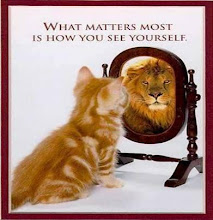
3. Recognize that the best version of yourself should be your vision, not anybody else’s. Don’t waste energy trying to live up to what somebody else wants you to be.
4. Stop looking for a secret trick. There is no miraculous shortcut to the better version of yourself.
5. Use Twitter to network. It’s never been easier to get in touch with influential and powerful people. Earlier in my career, I reached out a high-level executive of a company I was interested in. He was hosting an AMA session on Twitter. I asked him for advice about how to get hired for his company, and not only did he reply with some helpful tips, he also connected me with specific people at the company about an open position.
6. Don’t sweat the details. Just make sure that you’re moving in the right general direction. You probably don’t have the knowledge you need today to know the shortest path to your happiness 5 years from today. But you probably have some idea about how to move in the right direction. Take those steps.
7. Recognize the opportunity at hand. The Internet has fundamentally changed everything. Previously, knowledge was locked away in the minds of industry experts and in the pages of books that you needed to buy or check out from a library. But now, it’s easier than ever to learn new skills. This is essential to becoming the best version of yourself.
8. Write on Medium. Translating your thoughts into written narratives pushes you to think about the ideas in your head at a much deeper level.
9. Don’t count the hours. They don’t matter. Think about the last time you ran on a treadmill. If you looked down at the timer every few seconds, you probably didn’t enjoy your run. In turn, this made it far more difficult to run far.
But what if you took the opposite approach? You plugged in your headphones, lost yourself in the music, and took it one stride at a time….while resisting any temptation to look at the timer at all. If you did this, you probably discovered that you enjoyed the run and made it pretty far. Counting hours just slows you down from reaching your goal.
10. Accept help from other people. Don’t let your pride get in the way. Most successful people needed help along the way, too.
11. Launch a personal website. Maintaining an online presence of yourself pushes you to become the best possible version of you.
12. Write answers on Quora. Quora is an amazing place to help and inspire people at scale.
13. Ignore the social media scoreboard. People depict an extremely exaggerated version of life on Facebook, Instagram, Snapchat, and other social platforms. We only share the good things, not the bad. So when you compare yourself to what you see on social media, you’re just hurting yourself.
14. Celebrate the small wins. Appreciating what you’re doing in the present gives you the motivation to keep making strides towards your ultimate goal.
15. Stop pretending to know things you don’t know. You’ll never learn anything if you pretend to already know everything.
16. Embrace failure. You can’t become the best version of yourself by playing it safe. Heck, getting fired could even be the best thing that ever happened to you, just look at Noah Kagan (employee 30 at Facebook).
17. Call your family. This is just the decent thing to do. But you can also learn lessons from your family that aren’t available through any Google search and aren’t accessible to pretty much anyone else in the world.
18. Exercise in the morning. Once I started doing this in the morning, I became far more focused and relaxed throughout the day. Science backs that up, too.
19. Create a side project. Doing something productive outside of work that makes you happy helps you become a better version of yourself. So, whatever it is...an app, film, album, whatever….start doing it on your nights and weekends. And who knows? It might just turn into a full-time job that you love.
20. Help other people become the best version of themselves. Pay it forward. Doing so keep you motivated on your own path, and you’ll find that the lasting connections you build from helping others will greatly benefit you moving forward.
21. Launch your MVP early. If you’re not satisfied with the current version of yourself, then the quickest way to solve the problem is to begin working towards the better version today. There is no “right time” to get started.
It can be tempting to think about the best version of yourself as some intangible point in the future. You know, the one where you are:
- More successful
- Doing what you love
- Existing as an overall happier person
You see your current self as the regular season, and you’re just waiting for the playoffs to start before giving it your all.
But if all you do is wait for the best version of yourself to happen, you’re forever going to be stuck with the current version.
So, how do you launch the best version of yourself? Start making progress today.
Sunday, March 17, 2013

Ring all the bells, chime all the clocks.
Encourage the animals to crowd with goody stocks,
Sound all the trumpets and with a steady drum,
Break out the flag, let the patriots come.
Let airplanes circle shrieking overhead,
Scribbling in the sky, SHE IS WELL.
Tie red, white, and blue ribbons round turtle doves,
Let the patriots salute with white cotton gloves.
She is my North, my South, my East and West,
My awaken state and my nighttime rest
My light by night, my breath with song;
I never knew that love could be this strong.
The stars are welcomed now; light every one,
Unfurl the moon and unpack the sun.
Calm the storm and tidy up the mess;
For all things now are wonderful and jest.
We Love You Neona! Now & Forevermore!

Subscribe to:
Posts (Atom)